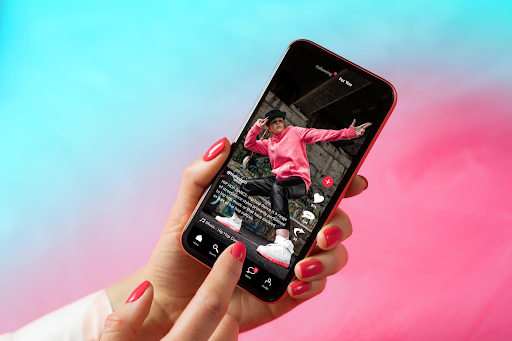
Short-form videos dominate almost every major social media platform today, and this is no accident. These clips are engineered to capture attention within seconds. They often open with a fast hook, loud audio, or surprising visuals because the brain reacts quickest to sudden or novel information. When something grabs attention that quickly, curiosity kicks in before any real decision making happens. Since each clip lasts only a few seconds, it feels harmless to watch “just one more,” which easily turns into a long, unplanned scrolling session.
A 2022 study in Frontiers in Psychology found that platforms such as TikTok and Instagram Reels are purposely designed to push viewers into a flow state. This is a mental zone where time fades and awareness narrows to the activity at hand. The steady stream of new videos, fast loading, and endless feed keep the brain focused on whatever pops up next. Once someone slips into this state, time becomes very easy to lose.
To understand this on a more personal level, I spoke with Gregory Jordan, a student at Hendrick Hudson High School, who says the humor alone keeps him caught in long scrolling streaks.
“Honestly, with how funny they are,” Gregory said. “I just laugh so hard, and the next video is always funnier.” Gregory’s reaction lines up with what researchers describe. The brain naturally pays attention to anything rewarding, and humor creates a strong emotional pull.
Dopamine, a brain chemical that creates feelings of pleasure and motivates you to seek rewards, plays a major role in why short-form content feels so addictive. Each new video gives a small burst of dopamine, not enough to overwhelm,

but enough
for the brain to think, “That felt good, let’s watch another.”
Because the next clip is always unpredictable, the brain treats each swipe like a tiny gamble. When a possible reward is expected, dopamine rises even before the reward appears, which makes stopping even harder.
This “maybe the next one will be good” effect is one of the strongest parts of the cycle. Neuroscientists call it variable reinforcement, the same principle used in casinos.
Gregory described it clearly: “Yeah, all the time. I spend so much time on it, and I realize it’s such an easy time waster because of how much I’m enjoying it.”
That mix of entertainment plus uncertainty keeps many people watching far longer than intended.
Science reveals the effects go beyond the apps themselves. A 2024 study in BMC Psychology linked heavy short-form video use to worse sleep quality and higher social anxiety in teens. When the brain gets used to fast and highly stimulating content, slower activities like homework, reading, or studying start to feel more difficult.
Gregory agreed that these apps interfere with concentration: “I’m going to say yeah… I’m so distracted. If I never had TikTok, I would be way more focused on my work.”
This reflects a pattern researchers point out: the more time spent on fast, high-reward content, the harder it becomes to adjust to tasks that require patience or deeper thought.
Short-form videos also fit neatly into busy daily routines. They can be watched in line, on the bus, or between classes. They require almost no mental effort, and algorithms rapidly learn each person’s preferences. Once the algorithm gets it right, the feed turns into a personalized highlight reel, with only the funniest, most exciting, or most interesting videos, one after another.
With statistics from The World Data, the numbers show how strong the habit can be: The average TikTok user spends around 95 minutes per day on the app, more than one billion videos are watched on TikTok each day, and the average user checks the app 20 times per day.
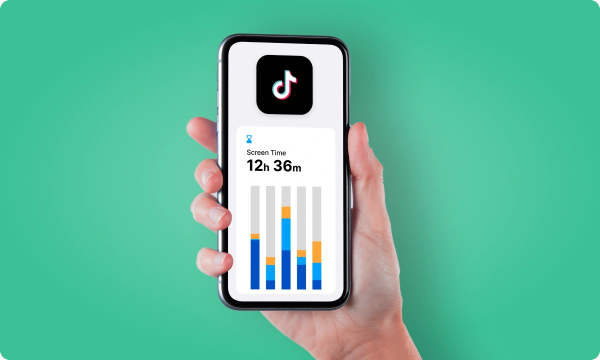
These statistics highlight that this is more than casual entertainment. For many, it becomes a powerful routine.
Still, cutting back is possible. When asked if he ever tried to reduce his use, Gregory said: “I have, and it was not that difficult. You just gotta find something entertaining, something that you like.”
This suggests that breaking the habit is easier when replaced with something that fills the same need — whether that’s longer videos, hobbies, or other activities that give the brain a different kind of reward.
Though the videos are short, the time spent on them adds up quickly. Ten minutes becomes thirty. Thirty minutes become an hour. Because each clip feels small, the total time often goes unnoticed until everything stops.
Understanding why short-form videos feel so addictive, and hearing students such as Gregory describe their own experiences, helps show how these apps shape daily behavior. Even though they are designed to hold attention, becoming aware of their effects makes it easier to stay in control of personal time and attention, instead of letting the scroll dictate the day.